
English| EUR
Suggested for you
More currencies
Book Now
Difficulty Guide

How Hard Is the Inca Trail Hike

Most walkers arrive at Km 82 fit enough for the distance and unprepared for the altitude. This how hard is the Inca Trail hike guide separates the two, then sets out what each day actually demands. Expect figures, not reassurance.

6 min read Updated 2026-08-07 Fact-checked
How Hard Is the Inca Trail Hike

Quick answer

The Inca Trail rates moderate to challenging: roughly 70,866 stone steps, a high point above 4,200 m at Warmiwañusca, and four days of sustained ascent and descent. Distance rarely defeats people — thin air does. Trekkers who acclimatise in Cusco for two or three days and start within the 05:30–08:00 arrival window generally finish comfortably.

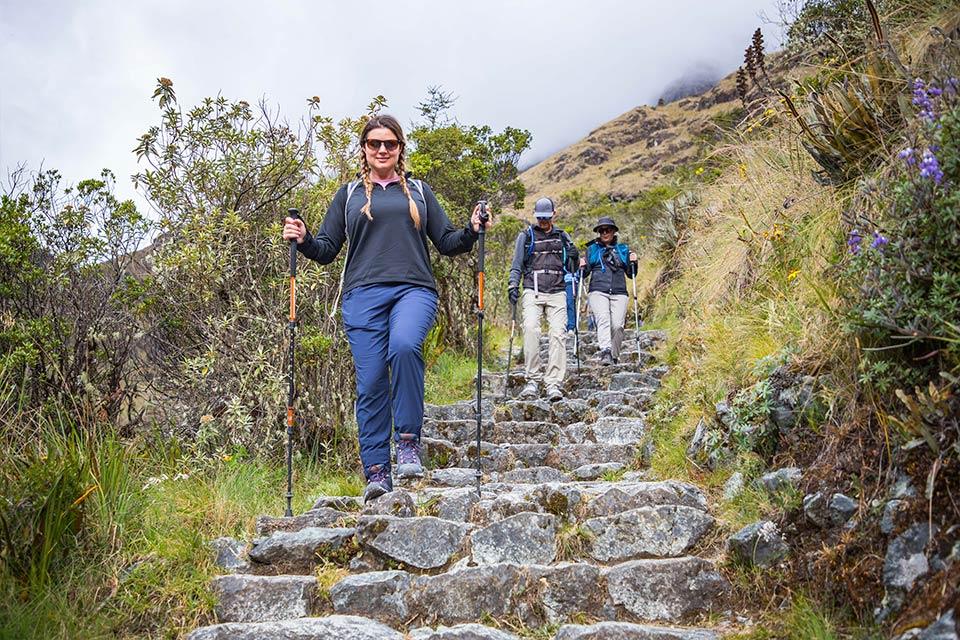
The Camino Inca is not measured in kilometres by the porters who walk it weekly — it is measured in steps, and there are 70,866 of them between the Km 82 checkpoint and the Sun Gate. That number explains why the trek defeats gym-fit visitors and rewards patient walkers. Nothing about the Inca Trail trek is technical. There is no scrambling, no exposure requiring ropes, no navigation problem. The difficulty is cumulative: irregular granite risers, quadriceps-heavy descents, and oxygen at roughly sixty percent of sea-level concentration. Anyone asking how hard is the Inca Trail hike should separate the four days rather than average them. Day one from Piscacucho is gentle and deceptively pleasant. Day two climbs to Warmiwañusca — Dead Woman's Pass — and is the day that decides most people's opinion of the route. Day three is the longest, crossing Runkurakay and Sayacmarca before the descent to Wiñay Wayna, and it punishes knees more than lungs. Day four is short, dark and early, ending at Inti Punku above Machu Picchu. Altitude sickness, not fitness, is the common reason permits go unused; two or three nights in Cusco or the Sacred Valley beforehand does more than months of training. Preparation that actually transfers is unglamorous. Stair repetitions, loaded descents, and broken-in boots matter more than distance running. Trekking poles with rubber tips reduce impact on the descents and are permitted. Porters carry group equipment, but personal weight still climbs every step with the walker. The permit itself is fixed at 292 PEN for foreign adult travellers, issued through the Ministry of Culture, and the trailhead operates 05:30–14:00 daily. Arriving between 05:30 and 08:00 avoids midday heat and leaves enough daylight to reach the first campsite without rushing. For travellers who find the four-day profile too demanding, the shorter Km 104 route to the Sun Gate covers the same UNESCO-listed stonework in a single day. Reading how hard is the Inca Trail hike as a fitness question misses the point: it is a pacing question, and pace is the one variable entirely within the walker's control.

“Distance rarely defeats people on the Inca Trail — thin air and stone steps do.”
Book

Check availability

Questions

FAQ: How hard is the inca trail hike?

Everything you need to know about how hard is the inca trail hike

What should I expect when planning this journey?
Assessing how hard is the inca trail hike depends heavily on your physical preparation and acclimatization to high elevation. The classic route covers mountainous terrain, reaching a peak altitude of 4,215 meters at Dead Woman's Pass. Preparing with cardiovascular exercise helps manage the steep ascents and 70866 steps along the path.
When people research how hard is the inca trail hike, which day is the toughest?
Most guides agree that day two is the most grueling stretch of the path. On this day, hikers ascend steeply through changing microclimates toward Warmiwañusqa. The descent to the Pacaymayo campsite also puts significant strain on the knees.
How can I prepare my body for the Cusco Machu Picchu trek?
Building stamina through hiking, stair climbing, and running is key to enjoying this Andean hiking routes experience. Spending at least two to three days in Cusco before starting helps prevent altitude sickness. Hiring local porters to carry heavy gear reduces physical strain during the steep climbs.
Are there physical requirements or age limits for the journey?
There is no official age limit, but you should evaluate how hard is the inca trail hike relative to your personal health. Children and older adults must be in good cardiovascular shape to handle the steep, uneven stone steps safely. It is highly recommended to consult a doctor before committing to this high-altitude trek.
What is the permit booking process and does it impact trail difficulty?
Securing a permit does not change the physical challenge, but early reservation is mandatory since spots are strictly capped. The official government permit fee is 292 PEN for foreign adult travelers, and you must book through licensed agencies. Having your permits sorted well in advance reduces pre-trip stress, allowing you to focus on physical training.
Does the weather affect how hard is the inca trail hike?
Wet weather during the rainy season makes the stone steps slippery and increases the difficulty of the climbs. Hiking during the dry season, particularly between May and September, offers stable conditions but cooler nights. Starting during the best arrival window from 05:30 to 08:00 ensures you avoid the intense midday heat on day one.
How do the facilities and campsites along the Camino Inca handle safety?
Campsites along the Camino Inca have designated spaces managed by local authorities to ensure hiker safety. Guided groups carry first aid kits, oxygen tanks, and communicate regularly via radio to manage any physical emergencies. Most hikers find that having professional support makes the challenging journey through the mountain passes much safer.
Keep reading

More guides & pages